
Canvas or Nylon: Choosing the Bag That Is Not Leather
Almost every bag guide compares one leather against another. We have written one of those ourselves, on vegan leather against full-grain.
This is the other conversation. If you have already decided you do not want leather, because of the weight, the price, the upkeep or the material itself, then your real choice is canvas or nylon. They are both good and they are not interchangeable.
They Fail in Opposite Ways
This is the difference that matters and it is rarely stated.
Canvas wears out gradually. It fades, it thins at the corners, it softens. A canvas bag three years in looks used, and most people read that as character. It gives you a long warning before anything fails.
Nylon fails suddenly. It looks close to new for years, and then a zip goes or a seam opens and the bag is finished. There is no middle period where it looks worn but works fine.
If you like knowing where you stand with a thing, canvas. If you want it to look new for as long as possible and you accept a short ending, nylon.
Weight and Water
Nylon wins both, and not narrowly.
A nylon bag of a given size is lighter than the canvas equivalent, and the gap grows with the bag. On a commute that is a few hundred grams. On a full day it is the difference between noticing the bag and not.
On water, untreated canvas absorbs and stays damp. Nylon sheds. If your bag regularly carries a laptop through rain, that is close to decisive on its own. Our nylon bags sit in the backpack and sling ranges.
What Canvas Gives You Back
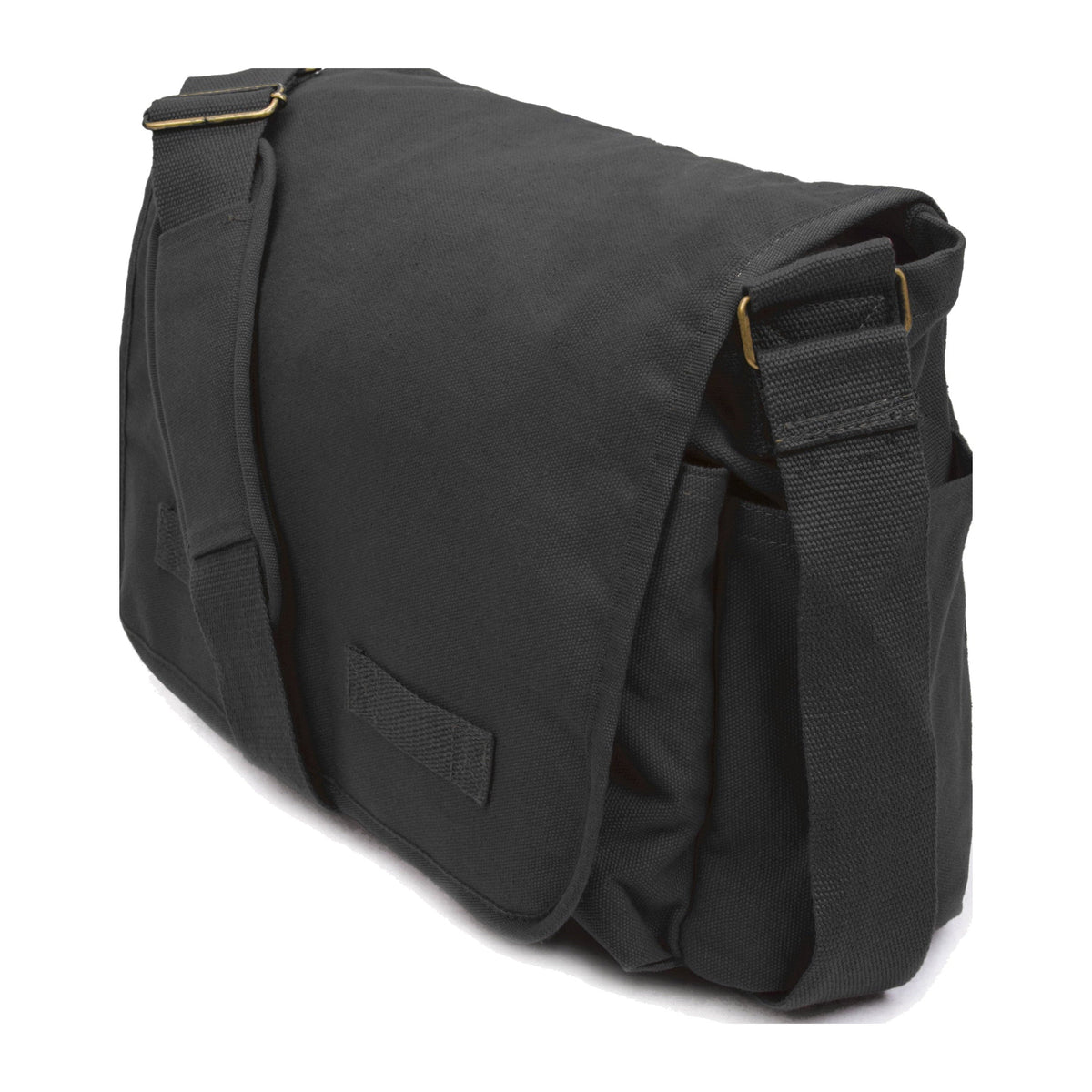
It looks like something. Nylon reads as equipment. Canvas reads as clothing, particularly with leather trim, and that matters in a room full of people.
It takes a beating without complaint. Canvas does not mind being over-packed, sat on, or thrown in a car boot, and it does not mind being cleaned roughly.
It is quieter. Technical nylon has a sheen and a rustle. Canvas has neither, which suits the way we think bags should look.
Our canvas messengers are the clearest example of the trade: heavier than nylon, better looking, and entirely unbothered by a hard week.
The Part That Fails First on Both
Neither material is usually what breaks. The failure point on a canvas or nylon bag is almost always the hardware and the stitching where the strap meets the body.
So when you are comparing two bags of the same fabric, spend your attention there. Look at whether the strap anchors into a reinforced panel or straight into a single layer of fabric. Look at whether the zip pulls are metal. Look for a bar tack, which is the dense little block of stitching at a stress point.
A cheap bag in good fabric with weak anchoring will fail before an average bag that is properly stitched.
How We Would Choose
Nylon if the bag is a tool. Commuting in weather, travel days, anything where you want it light and you do not care what it looks like at the end.
Canvas if the bag is part of what you are wearing. Office carry, weekends, anything where it will be seen and where you would rather it aged than stayed sterile.
If you find yourself wanting both properties at once, that is usually the signal to go back and reconsider leather, which is heavier than both and outlasts both.
Common Questions
Is Waxed Canvas Worth the Premium?
For genuine rain exposure, yes. Waxing closes the weave and gets you much of nylon's water resistance while keeping the look. It needs re-waxing every year or two and it marks more easily.
Does Nylon Have a Grade Worth Knowing?
Denier, written as a number like 600D or 1000D, is the thread weight. Higher is tougher and heavier. Below about 400D is a light bag that will not take rough use.
Can You Clean Either at Home?
Canvas takes mild soap and a brush. Nylon takes a damp cloth. Neither goes in a washing machine, which distorts the structure and destroys the stiffening panels.
Which Holds Value Better?
Neither holds value. That is a leather question, and the only one of our bags that genuinely improves with age is the full-grain leather duffel in the duffel range.

Leave a comment
This site is protected by hCaptcha and the hCaptcha Privacy Policy and Terms of Service apply.